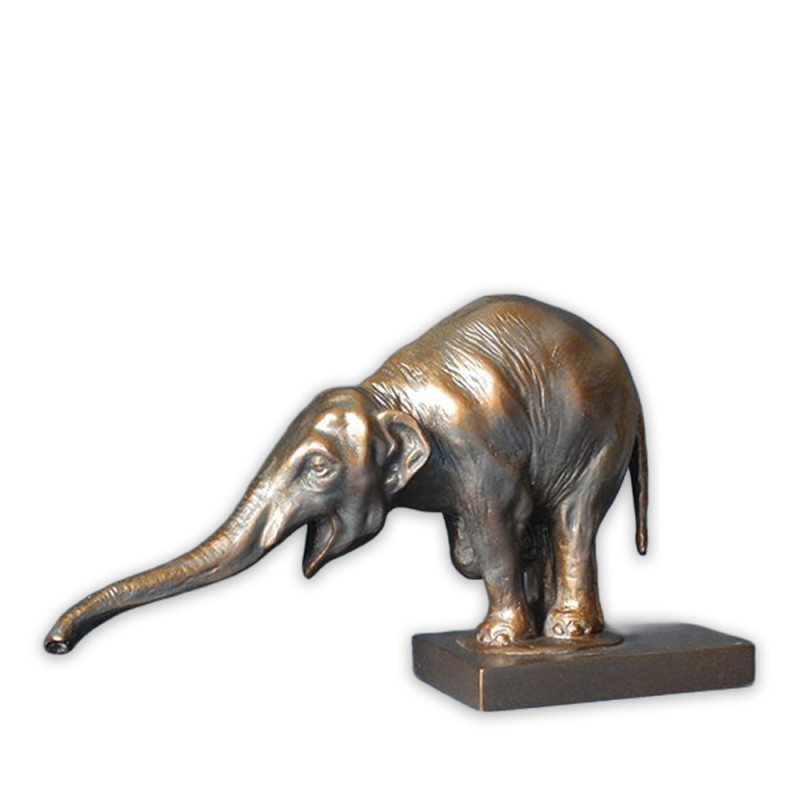
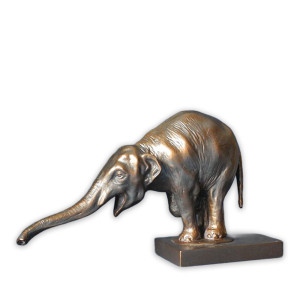
Bugatti had become exceptionally fascinated by African elephants at the Jardin des Plantes. In Antwerp he had plenty of opportunity to observe their Asian cousins in their spectacular enclosure shaped like an Egyptian temple. Bugatti visited the zoo almost daily and enjoyed feeding the begging giants with their sensitive trunks.
Bugatti had become exceptionally fascinated by African elephants at the Jardin des Plantes. In Antwerp he had plenty of opportunity to observe their Asian cousins in their spectacular enclosure shaped like an Egyptian temple. Bugatti visited the zoo almost daily and enjoyed feeding the begging giants with their sensitive trunks.

Rembrandt Bugatti (1884-1916) Rembrandt was a son of the famous creative Milanese family, the Bugattis. His father was an important designer and exponent of art nouveau, his elder brother Ettore founded the Bugatti car company and he was named after an uncle who was a painter. The tall, shy Bugatti lived a reclusive life that he dedicated to studying the wild animals in the Jardin des Plantes park. In 1907, he left for Antwerp where he visited the famous, and – at the time – world’s largest zoo, every day. Initially he modelled the animals naturalistically, but from 1910 onwards he explored new, slightly cubist shapes, conspicuously presaging the later Art Deco.
This workshop was originally specialized in restoration of religious paintings and sculptures. After the delicate work of restoring Artworks, these craftsmen with their unique skills decided to go further, still bringing life to paintings but this time by lifting images out of the flat surface. With the greatest respect for the original work, they make accessible and affordable the most beautiful works in the History of Art. Plus the originality of a three dimensions adaptation.