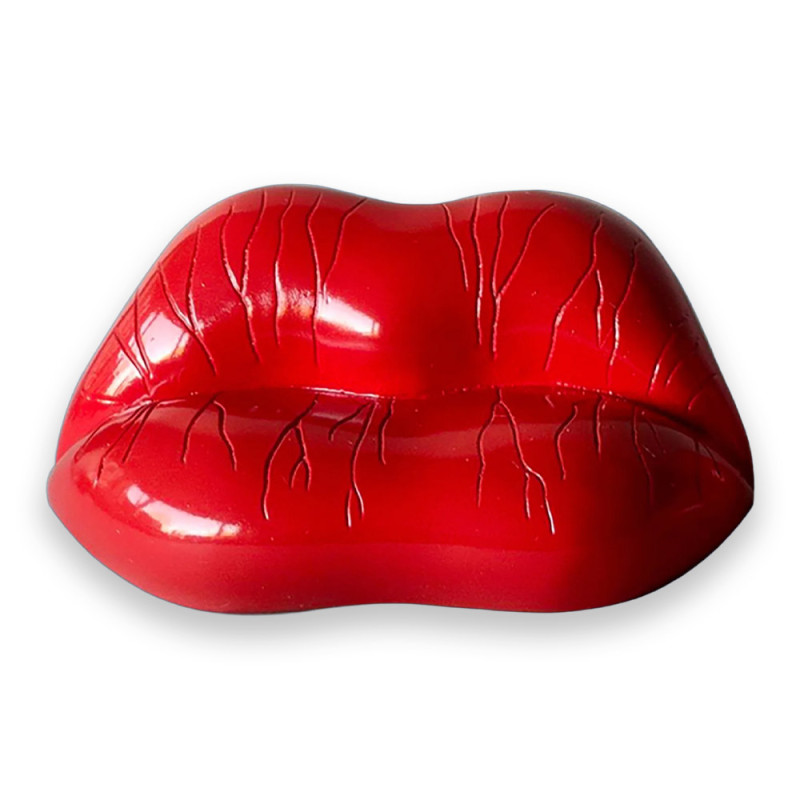
The Mae West Room is one of the most popular rooms in the Dalí Theatre-Museum. Upon seeing a photograph of the Hollywood actress, Dalí was inspired to transform her face into a surrealist apartment, and created the work "The Face of Mae West as a Surrealist Apartment" between 1934 and 1935. This painting was later transposed into a three-dimensional version at the Dalí Theatre-Museum, and the famous luscious red mouth in the form of a sofa is a sensation.
The Parastone workshop adapted this creation into a small, original sculpture faithful to Dalí's work.
The Mae West Room is one of the most popular rooms in the Dalí Theatre-Museum. Upon seeing a photograph of the Hollywood actress, Dalí was inspired to transform her face into a surrealist apartment, and created the work "The Face of Mae West as a Surrealist Apartment" between 1934 and 1935. This painting was later transposed into a three-dimensional version at the Dalí Theatre-Museum, and the famous luscious red mouth in the form of a sofa is a sensation.
The Parastone workshop adapted this creation into a small, original sculpture faithful to Dalí's work.
Originally, the Dutch workshop Parastone, founded in Hieronymus Bosch's birthplace, specialized in the restoration of religious paintings and sculptures. After the delicate work of restoring works of art, these artisans with their unique expertise decided to go further, bringing the paintings back to life, but this time by removing the images from the horizontal plane. Thus, it is with the deepest respect for the original works that they make the most beautiful works in the History of Art accessible to all. The originality of a three-dimensional adaptation is added.